The film features footage shot in Kinshasa. It was filmed during a production we were able to carry out at the Institut Français in 2024. There, it formed part of a performance. I have re-edited the footage to adapt it to the context used here. It is intended to give an impression of the cityscape, though only a small section is shown. The people who appear in the footage were chosen at random and are just representative in character.
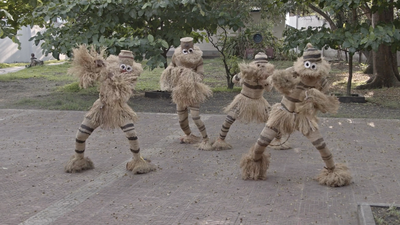
The film features footage of rehearsals by Ballet Umoja, an orchestra dedicated to performing the country's various dance and musical traditions. The film showcases Pende culture. It is truly impressive to see how dance and musical movements are synchronised within the choreography.
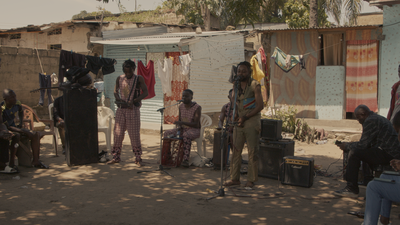
The musician Bouton plays the Likembe solo, accompanied by a Likembe bass, a rattle and a small drum. Their music is associated with the Kongo-Central province.
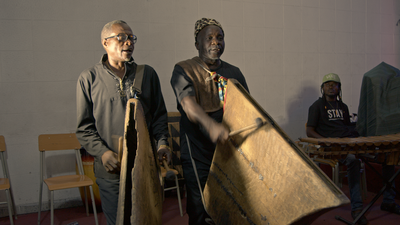
Tandjolo describes himself as “Mutetela Premier”, the first of the Batetela. Here he plays the Lokombe together with his colleague Otshudi — an instrument made from a single piece of wood.
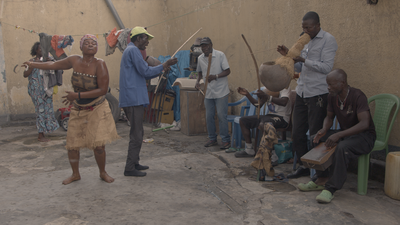
Kaas Ambiance is a group from the Mbuun people. They play the Langung, a musical bow that bears similarities to the Brazilian berimbau.
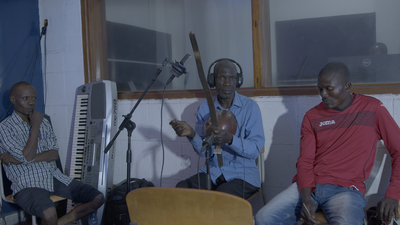
Papa Kayembe also plays Mbuun songs on the Langung. Here in the studio in preparation for a concert.
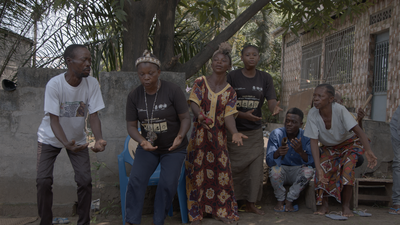
Pierrette Nsele Soyi and her group represent the so-called autochthonous or indigenous population from the Ingende area in Equateur province.
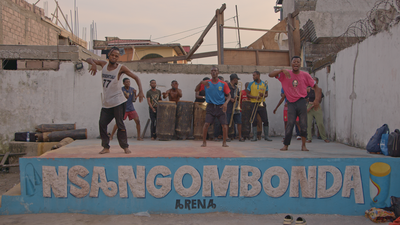
Rehearsals by Ballet Malebo, performing the same song from the Manyanga culture of the Kongo-Central region as shown at the beginning of the presentation.
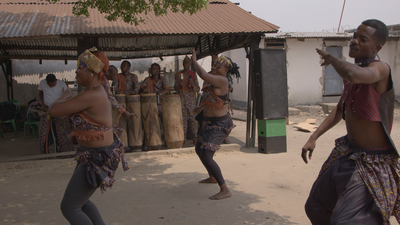
The Ndara Manyanga is one of the few traditional string instruments currently in use in Kinshasa. Djikens, who plays here, also has a workshop where he builds the instruments.
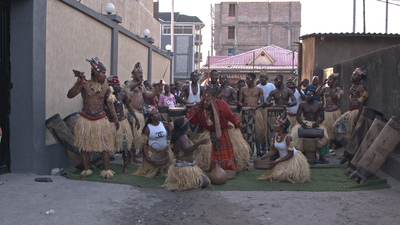
Ballet Mbili presents a ceremony of the Basengele. The performance takes place in the Yolo Nord neighbourhood, in a side street where the group also regularly rehearses.
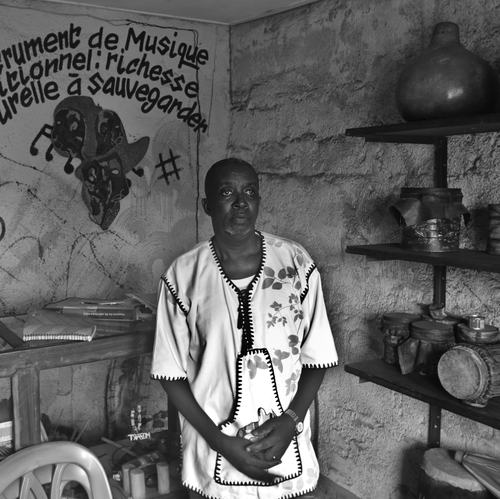
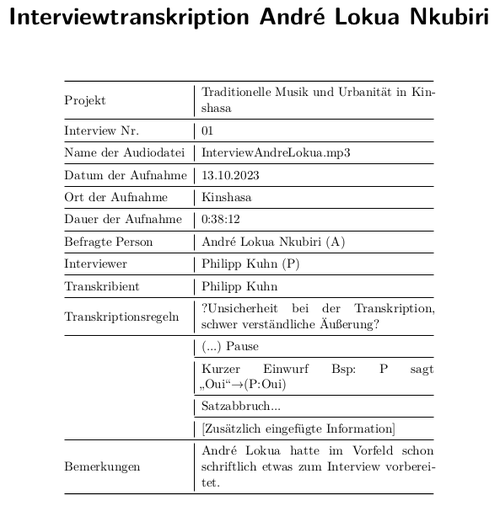
André Lokua Nkubiri
André Lokua Nkubiri is an instrument maker who specialises in traditional instruments. He runs a small shop at the Bongolo crossroads, where we met on several occasions. Lokua produces a wide range of traditional instruments and has also dedicated himself to their preservation. He works at the Musée National and the INA (Institut National des Arts). As well as being an instrument maker, he sees himself as a musician and ethnomusicologist, and it is clear that he is well versed in the subject.
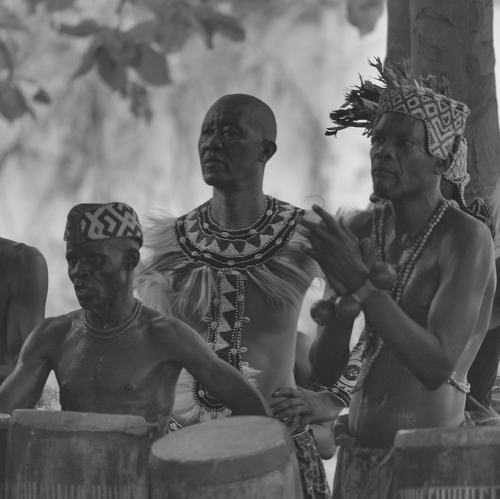
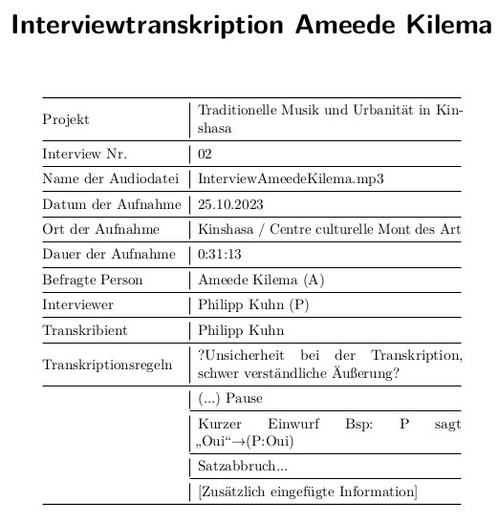
Ameede Kilema
Ameede Kilema is the long-standing artistic director of Ballet Umoja, one of the most well-known ballet companies in Kinshasa, which performs music and dance from a variety of Congolese cultures. Among other things, he speaks about the disappearance of traditional instruments.
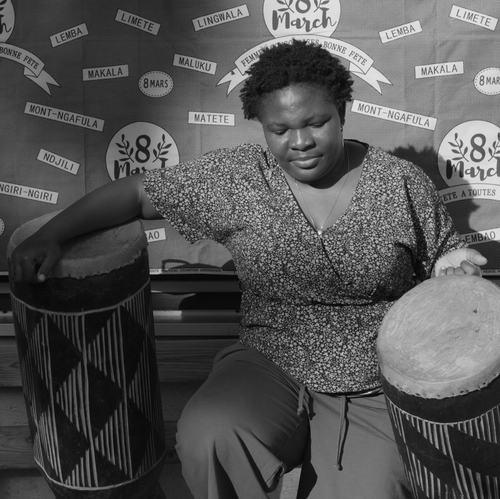
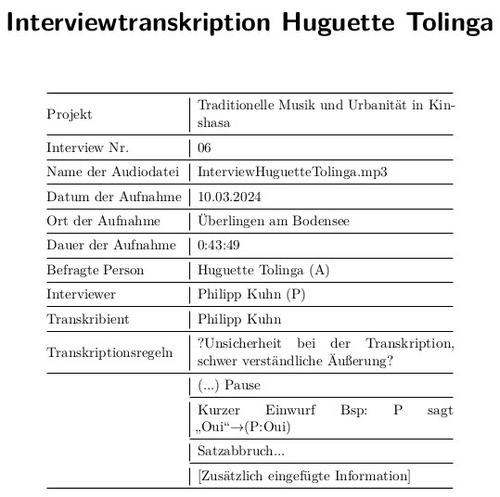
Huguette Tolinga
Huguette Tolinga is one of the few women known as an instrumentalist and percussionist. She comes from Boende/Equateur and is involved in many contemporary projects. She tours Europe regularly, and we conducted an interview on the subject in Germany. We are now married. Here she speaks about Kinshasa and what the city means to her and her music.
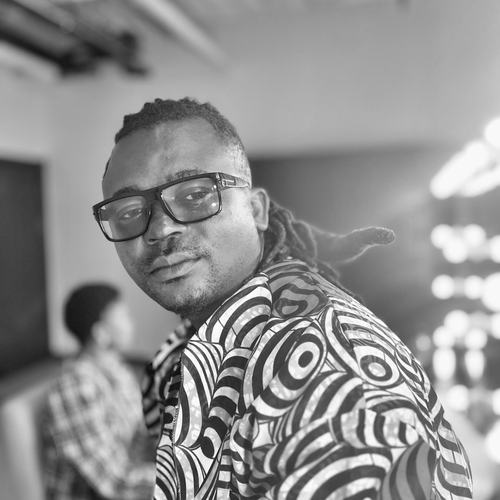
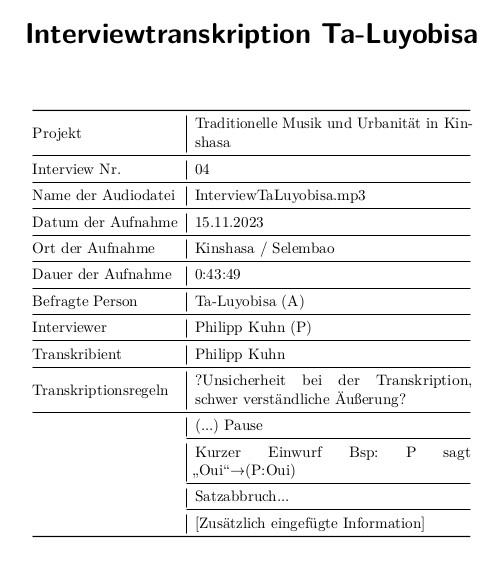
Ta-Luyobisa
Ta-Luyobisa is a xylophonist from the Kongo-Central region who has been living in Kinshasa for several years and has made a name for himself in both traditional and contemporary artistic circles. We discuss both specifically musical questions and questions about the city. In the background, the music of a neighbouring Christian church can be heard.
xvypmpsuyiqdrdmsujdifkowulqzej
dfkvkytjinosqzrudtdxyzvqsuydzm
wknflzopjnprymnwrinskuteqdjqwe
Très bien
Je crois qu'il vient au bon moment d'en parler,la musique dite folk (traditionnelle) est une maternité de bcp de formes que vous avons à ce jour dont l'une est notamment la Roumba. Malheureusement,dans la connaissance de plusieurs elle ne trouve pas vraiment une expression. Y a une cassure importante entre les générations,or dans son sens authentique,le folk est un outil indispensable (communication, information,et autres rites ancestraux) qui définit notre souche. Mais l'on y prête attention. À travers les démarches de Phillip Kuhn,nous espérons que nous mettrons à profit des échanges sur le plan scientifique que social autour de notre culture par le biais de sa musique d'origine. Bravo pour ce travail
Je tiens à te féliciter chaleureusement toi Phillip cet artiste passionné qui accomplit un travail remarquable dans le domaine de l’ethnomusicologie. À travers tes recherches et ton engagement, tu contribue à mieux comprendre comment la musique traditionnelle évolue et trouve sa place au cœur de la capitale moderne.
Félicitation pour le travail et merci pour cet honneur mais je vais savoir si le travail fait parti de la thèse de doctorat et si oui si il est déjà soutenu.
Bonjour Philipp ! Bravo pour cette belle trouvaille 🇨🇩❤️